Durga Puja 2026 Saree Guide: Tant, Garad, Korial and Baluchari, Day by Day From Shashthi to Sindoor Khela
Bengal's pujo runs from October 17 to Bijoya Dashami on October 21. Here is what to wear each day, why red and white matter, and how to tell Bengal's famous handloom sarees apart.
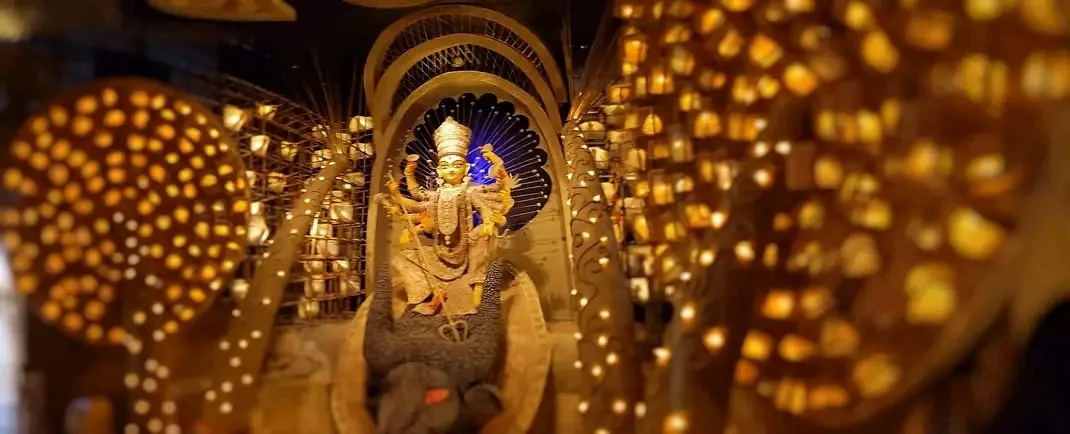
For Bengalis everywhere, the five days of Durga Puja are the year's biggest celebration, and also its biggest fashion moment. Families plan new clothes for every day, and pandal-hopping streets become a moving display of handloom sarees.
In West Bengal, the main days in 2026 are Shashthi on October 17 to Bijoya Dashami on October 21, according to the state's holiday calendar. Here is what to wear each day, and how to recognise Bengal's famous weaves.
Quick answer
- Shashthi to Navami (October 17 to 20): tant cotton for pandal hopping, silk for anjali and evenings.
- Bijoya Dashami (October 21): the red-and-white saree for sindoor khela, usually a garad, korial or laal-paar saree.
- Colours: white for purity, red for shakti and marital good fortune.
- Footwear: comfortable flats. You will walk for hours.
The 2026 calendar
- Mahalaya: October 10
- Shashthi: October 17, the goddess's awakening (bodhon)
- Saptami: October 18
- Ashtami: October 19, with morning pushpanjali and the Sandhi Puja
- Navami: October 20
- Bijoya Dashami: October 21, sindoor khela and immersion
Outside Bengal, Vijayadashami (Dussehra) is marked on October 20 in most calendars, a day earlier, because Bengal's panjika calculates the tithi differently.

A day-by-day saree guide
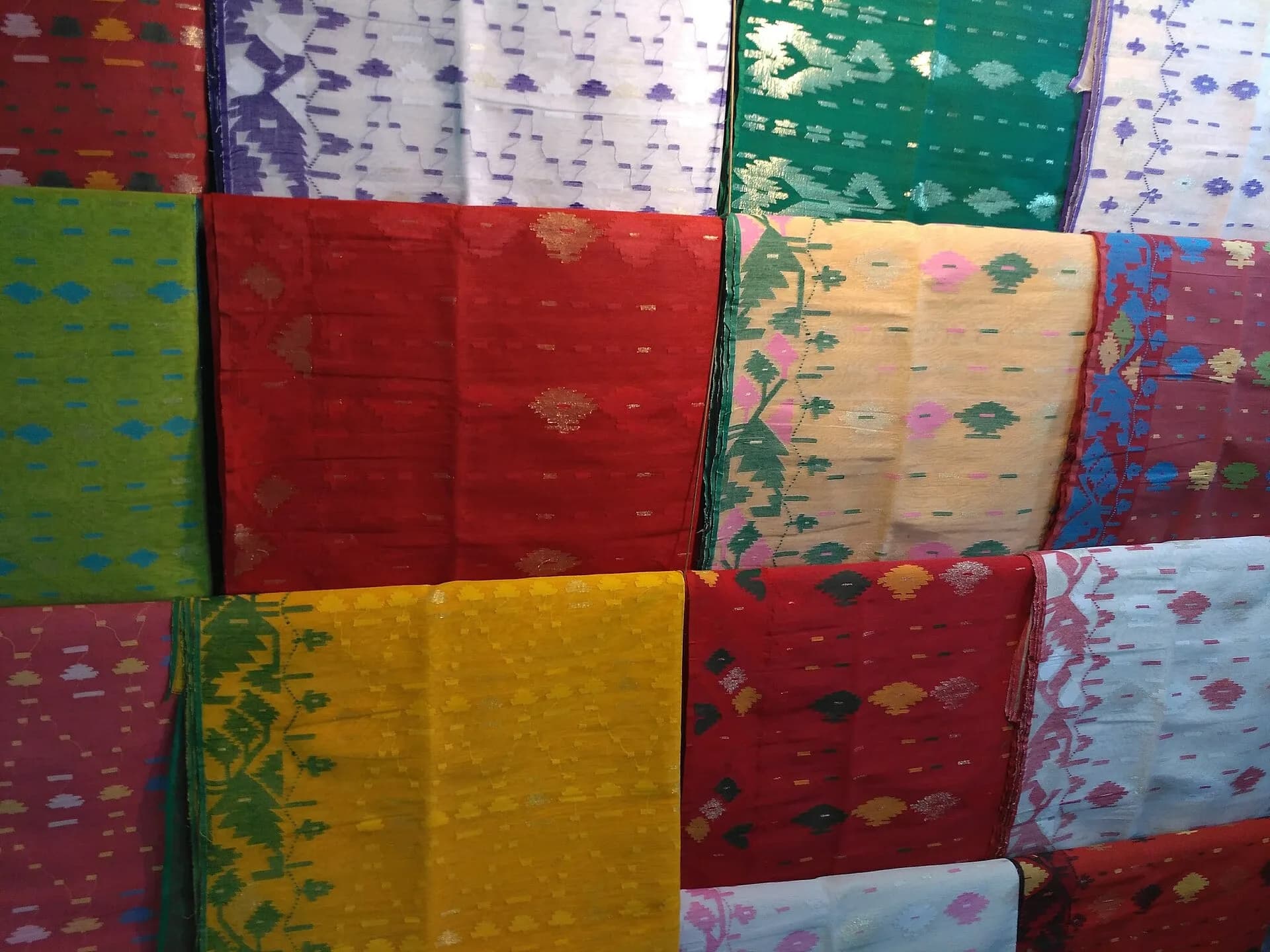
Shashthi: start fresh with tant. A crisp tant cotton saree, Bengal's everyday handloom, is perfect for the first evening of pandal hopping. It is light, airy and holds its shape in crowds and heat. Bright colours with contrasting borders photograph well under pandal lights.
Saptami: handloom with character. Try a Dhonekhali or Shantipur handloom, from the weaving clusters of Hooghly and Nadia, or a soft jamdani with woven motifs.
Ashtami: the big day, so go silk. Ashtami's morning anjali (flower offering) is the most important ritual for many families, and the day calls for your best. A Baluchari silk, famous for scenes from the epics woven into the pallu, or a rich silk in red, mustard or green is a classic choice.
Navami: evening glamour. The last full night of the pujo is about adda, music and food. A lighter silk or a georgette saree with a statement blouse works for long evenings.
Dashami: red and white for sindoor khela. The final day belongs to the white saree with a red border.
Why red and white?
The traditional laal paar saree is white or off-white with a red border. White stands for purity, and red for shakti, the goddess's power, and for a married woman's good fortune. Bengali married women traditionally wear the shankha (conch-shell bangle), pola (red coral bangle) and noa (iron bangle) with it.
Popular versions include:
- Garad: a fine silk, traditionally associated with Murshidabad, usually white or off-white with a red border.
- Korial: a softer silk with richer red borders and more drape, considered a little more festive.
- Tant laal paar: the cotton version, practical for dancing and the crush of the crowd.
What is sindoor khela?
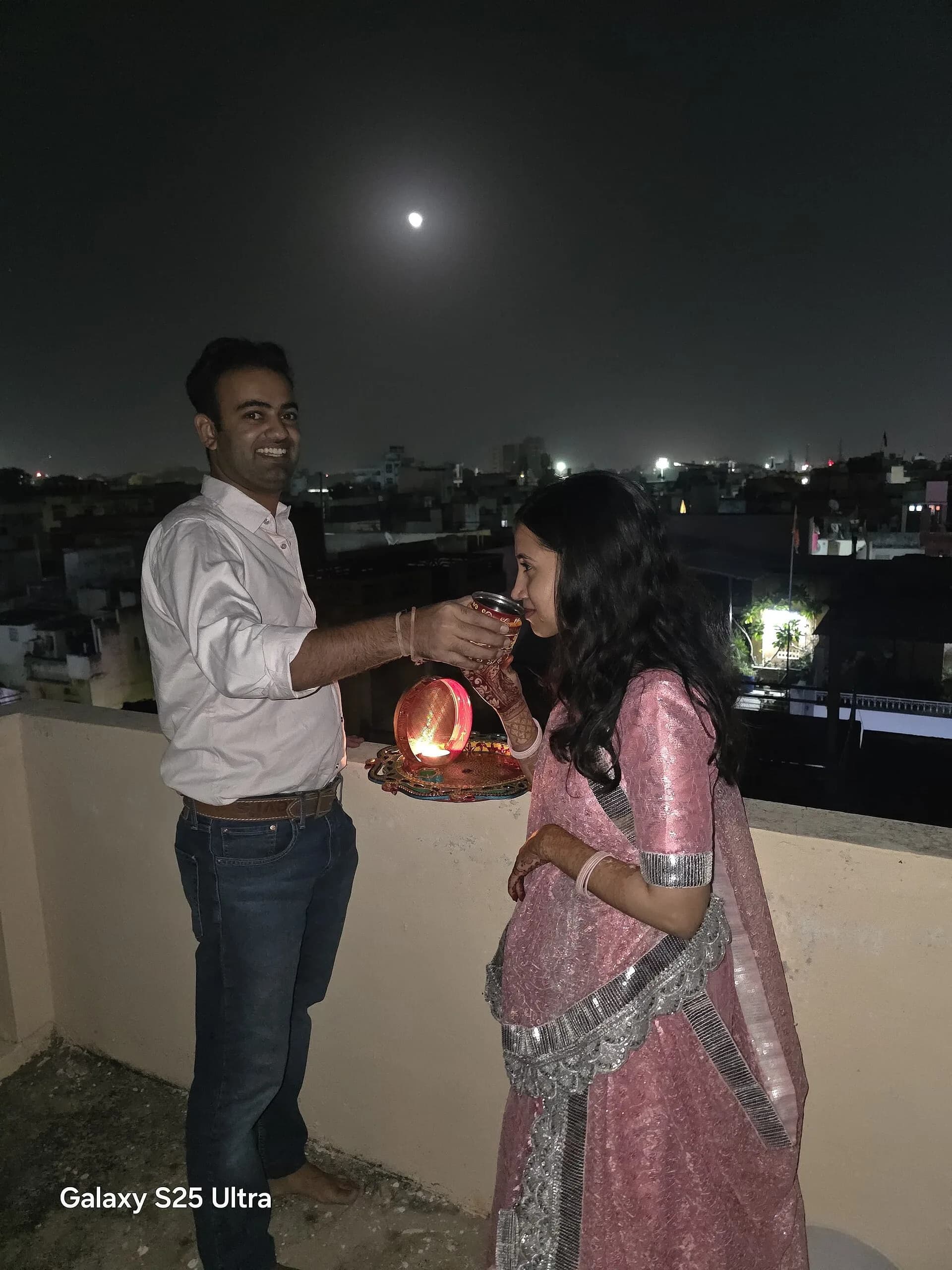
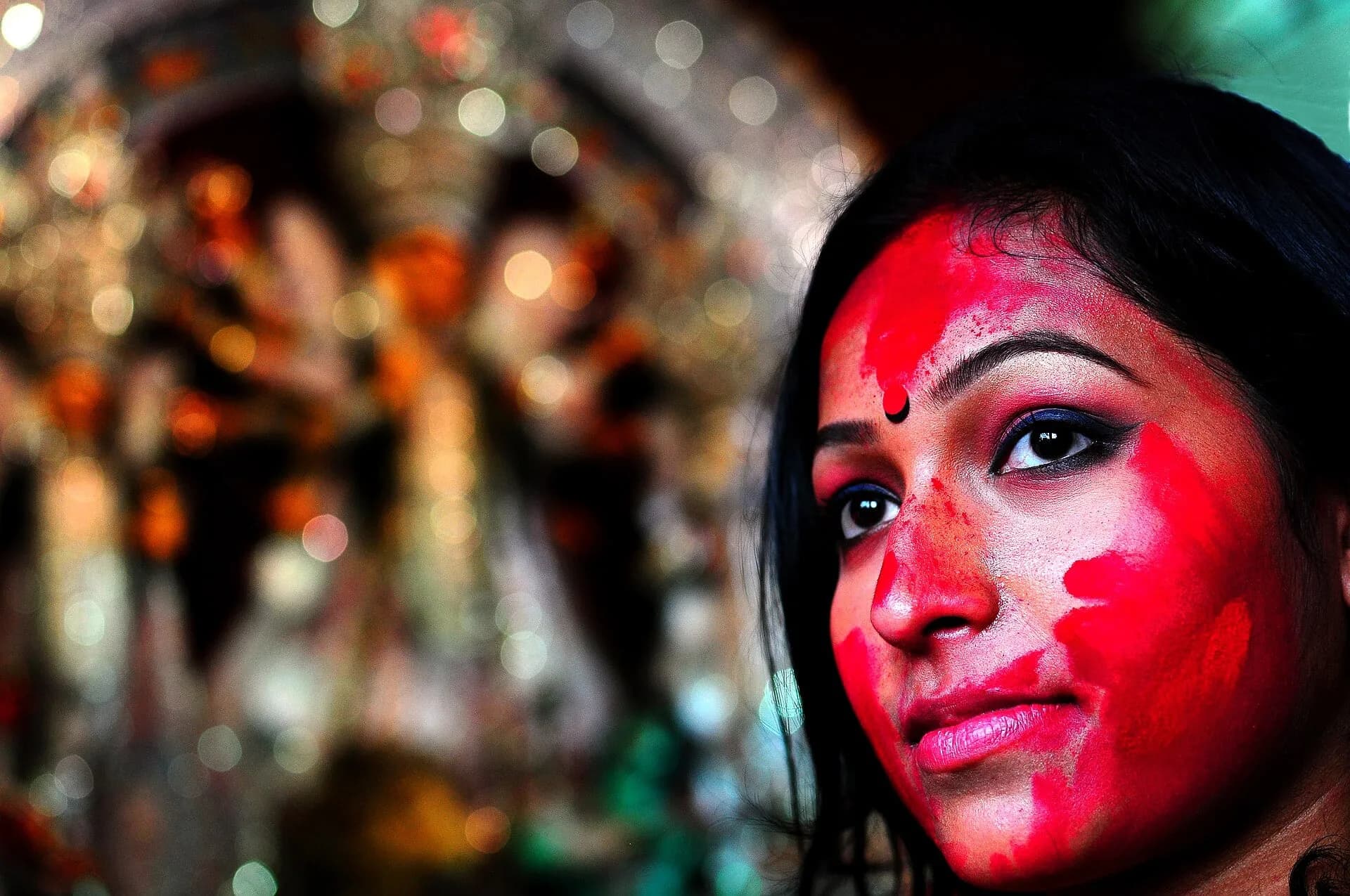
On Bijoya Dashami, after the final rituals, married women offer sindoor (vermilion) and sweets to the goddess, then smear sindoor on each other's faces and wish each other well. The ritual is believed to be about 400 years old in Bengal, though its exact origins are unknown. It marks Durga's departure to her husband's home, an emotional farewell. Many pujos now welcome all women to take part; check the custom at your local pujo.
How to drape it the Bengali way
The traditional aatpoure style has wide pleats in front, with the pallu brought over the left shoulder and back over the right, often with a bunch of keys tied to the end. Ask an elder at home to help the first time; it is easier than it looks.
Tips for five days of pujo
- Plan footwear first. Choose flat sandals or kolhapuris you can walk in for hours.
- Carry a small bag with water, tissues and a power bank.
- Choose handloom. Buying from weavers supports a craft that is under pressure from powerloom copies; read our guide to the Handloom Mark.
- Protect silk from sindoor on Dashami: older sarees are often kept for the day, because vermilion stains are hard to remove.
For the themes and pandals to visit, see our guide to Kolkata's Durga Puja pandals for 2026.
Related reading
Sources
This article draws on the following reporting. Dates are when each source was originally published.
- The Pujo: Durga Puja 2026 Dates: Mahalaya to Bijoya Dashami
- Bong Trendz: Sindoor Khela Saree: Why Bengali Women Wear Red and White on Bijoya Dashami
- Wikipedia: Sindur Khela
Written by
Stories, explainers and features published by The Daily, based on public sources that are listed with every article.
More from The Daily →Enjoyed this story?
Get the best of The Daily in your inbox every Sunday.