From Kashmir's Buta to the Bandana: How a Teardrop Motif Became 'Paisley'
The curved motif Indians call keri, kalka or mankolam was named after a Scottish mill town. The story runs through Persia, Mughal Kashmir and the Industrial Revolution.
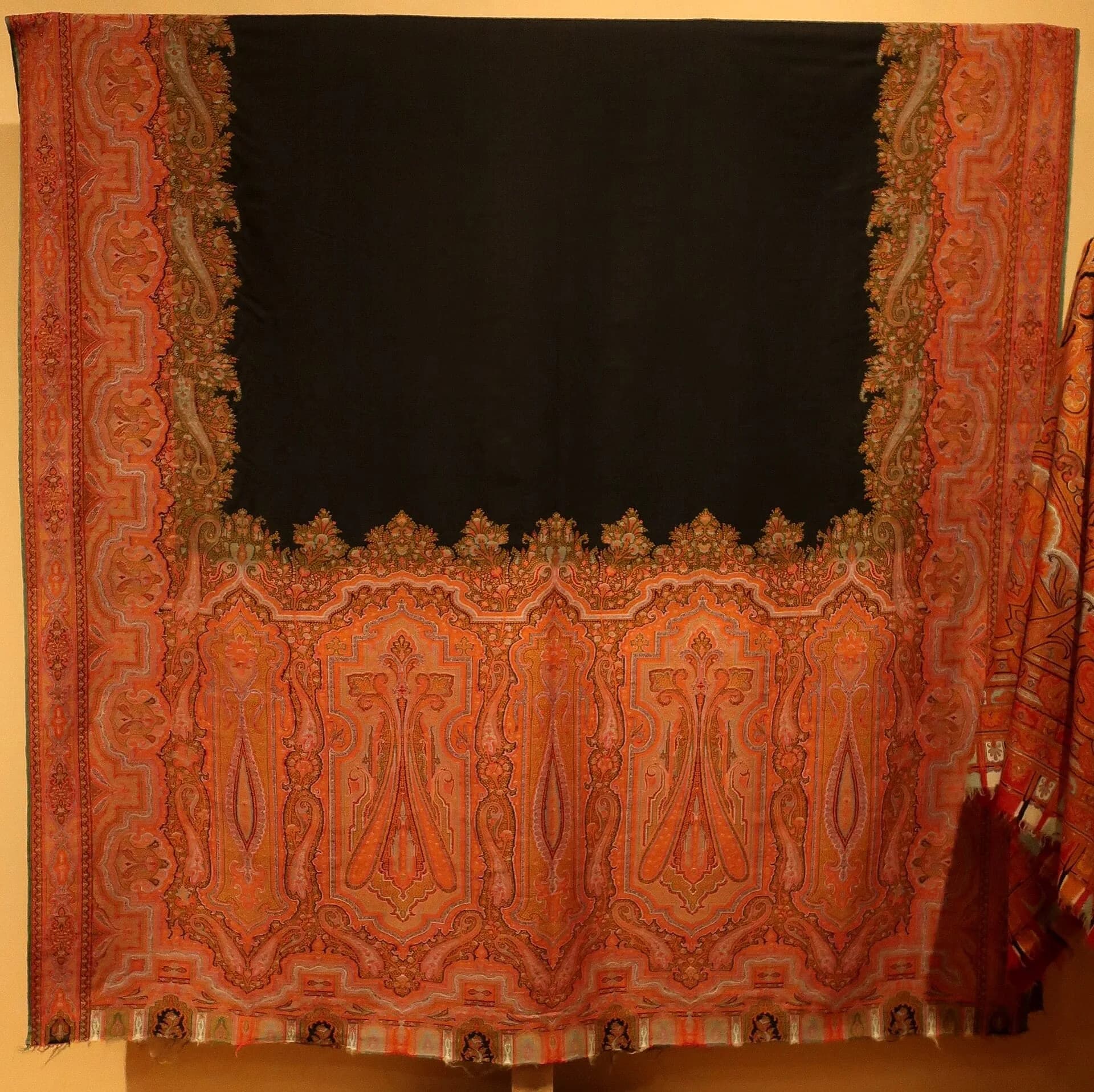
Look closely at a Kashmiri shawl, a Banarasi border or a cowboy's bandana and you may see the same shape: a curved teardrop with a bent tip, often filled with flowers and tendrils. In Hindi and Urdu it is the kairi or keri, the raw mango. Bengali speakers call it kalka, and in Tamil it is mankolam, the mango pattern. Most of the world, however, knows it by the name of a small weaving town in Scotland: paisley.
How a motif from Persia and Kashmir ended up named after Paisley says a lot about trade, imitation and the early industrial age.
Where the shape comes from
The motif is known in Persian as boteh, a word that can mean shrub or bush, and in Kashmir as buta. Its exact origin is debated, and historians offer several theories. Some trace it to plant forms such as the cypress or a stylised flower with leaves, others to older symbols of life and fertility. What is clear is that in Persia the floral boteh became a mark of status, woven into luxury textiles, sometimes with silver and gold thread.
Kashmir's luxury shawls
The motif's most famous home is the Kashmir shawl. Shawl weaving in the valley was well established by the Mughal period, and accounts from the reign of Emperor Akbar in the 16th century describe shawls as prized possessions and gifts. Over the following centuries the buta grew from a small flowering plant into the large, curving, densely patterned cone that is recognisable today.
These shawls were woven from extremely fine goat hair (the fibre known as pashm) using painstaking techniques, which made each piece slow to produce and very expensive. If you are buying one today, read our guide to identifying genuine Kashmir Pashmina.
The journey to Europe
From the mid-18th century, Kashmir shawls began reaching Britain and the rest of Europe, many through the East India Company. They became a fashion sensation among wealthy women, and because the originals were costly and scarce, European weavers began to copy them.
Several towns made imitations, but Paisley, near Glasgow, became the leading producer in the early 19th century. Its weavers adopted the Jacquard loom, a punched-card system that could repeat complex patterns, and by the mid-1800s they could weave designs in many more colours than before. Paisley's shawls were far cheaper than the hand-woven originals, and in time shawls of this style, wherever they were made, became known simply as "Paisley shawls". Eventually the name passed to the motif itself.
Printing made it everyone's
The next step brought the pattern to an even wider public. Printing the design onto cotton was much cheaper than weaving it, and Scotland and Alsace became important printing centres. Printed cotton squares carrying the motif are an early form of the bandana, later associated with American cowboys and workers.
The shawl craze itself faded around the 1870s, possibly because cheap printed copies had made the look too common for the wealthy. The motif never disappeared, though. It had a major revival in the 1960s, when psychedelic fashion and an interest in Indian culture put paisley on shirts, ties and even guitars.
Back home
In India the motif never needed a revival. The mango-shaped keri appears across textiles, from Kashmiri embroidery to woven saree borders and block prints, and it remains a staple of festive dressing. If you are planning your outfits for the season, our Diwali 2026 dressing guide has ideas.
So the next time someone calls a pattern "paisley", it is worth remembering that the shape is far older than the name, and that it reached Scotland by way of Kashmir.
Sources
This article draws on the following reporting. Dates are when each source was originally published.
- Wikipedia: Paisley (design)
- RISD Museum: What's in a Name? The Paisley Pattern and Kashmir Shawls
- National Museums Scotland: Stories about the South Asian origins of the paisley pattern

Written by
Newsroom
Reporting, explainers and analysis from The Daily’s editorial desk, based on verified public sources that are listed with every story.
More from The Daily Desk →Enjoyed this story?
Get the best of The Daily in your inbox every Sunday.