GI-Tagged Sarees of India: A State-wise List of Protected Weaves
Kanchipuram, Banarasi, Paithani, Chanderi, Pochampally, Sambalpuri, Baluchari, Tangail and more: India's geographical-indication sarees, state by state, with what a GI tag means and how to buy from authorised weavers.

A Geographical Indication (GI) tag works like a protected family name for a product. Just as only sparkling wine from Champagne can be called Champagne, only sarees woven in the right region, in the traditional way, can legally use names such as Kanchipuram, Banarasi or Paithani. India has registered dozens of sarees and handloom fabrics as GIs. Here is a state-wise list of the best known.
Quick answer
- Tamil Nadu and Odisha have some of the largest numbers of GI-tagged sarees.
- The best-known GI sarees include Kanchipuram silk, Banarasi, Paithani, Chanderi, Pochampally ikat, Patan Patola, Sambalpuri, Baluchari and Muga silk.
- Tangail Saree of Bengal is one of the newest, registered in January 2024.
- A GI tag protects the name and origin; it does not certify any single saree. For that, look for the Silk Mark and Handloom Mark.
What does a GI tag mean?
India's GI law was passed in 1999, and the Geographical Indications Registry in Chennai has been registering products since the early 2000s. A GI:
- links a product's quality and reputation to a specific region,
- lets registered producer groups and authorised users use the name,
- allows legal action against people who misuse it,
- is valid for ten years at a time and can be renewed.
For weavers, a GI is a tool against cheap copies that borrow a famous name. For buyers, it is a reason to ask where and how a saree was made.

GI-tagged sarees, state by state
Tamil Nadu - Kanchipuram (Kancheepuram) silk: heavy silk with zari and contrasting temple borders. - Arani silk: lighter silk from near Tiruvannamalai. - Kovai Kora cotton: cotton-silk blend from Coimbatore. - Thirubuvanam silk: fine silk from near Kumbakonam. - Salem Venpattu: white silk dhotis and fabrics from Salem. - Kandangi: checked cotton sarees from Chettinad.
Andhra Pradesh - Uppada Jamdani: feather-light silk with woven motifs. - Venkatagiri: fine cotton with zari. - Mangalagiri: crisp cotton with nizam borders. - Dharmavaram: silk with broad contrasting borders.
Telangana - Pochampally ikat: tie-and-dye geometric designs. - Gadwal: cotton body with interlocked silk borders. - Narayanpet: cotton and silk with distinctive borders.
Karnataka - Mysore silk: smooth crepe silk. - Ilkal: cotton with a red, looped pallu. - Molakalmuru: silk with intricate border motifs. - Udupi: cotton sarees from coastal Karnataka.
Kerala - Balaramapuram: fine handloom cotton. - Kasaragod: cotton sarees from northern Kerala. - Kuthampully: cotton and zari sarees from Thrissur.
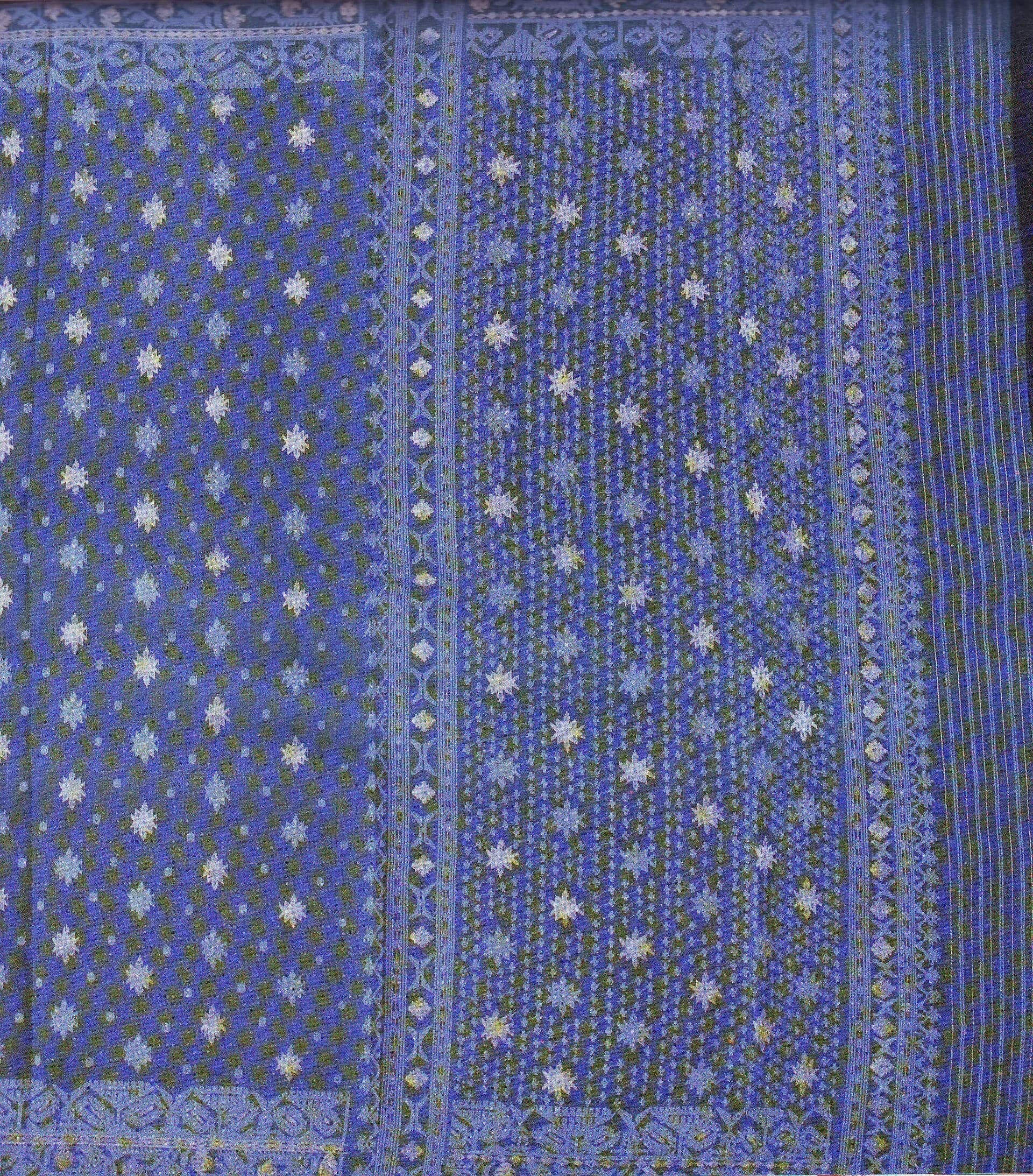
Maharashtra - Paithani: silk with peacock motifs and colour-changing body.
Gujarat - Patan Patola: double-ikat silk, among the most complex weaves in the world.
Rajasthan - Kota Doria: sheer square-check weave.
Madhya Pradesh - Chanderi: sheer silk-cotton with gold butis. - Maheshwar (Maheshwari): cotton and silk with reversible borders.
Uttar Pradesh - Banaras brocades and sarees: silk and zari brocades. Read our guide on how to identify a real Banarasi.
West Bengal - Baluchari: silk with story-telling pallus. - Shantipur and Dhaniakhali: fine everyday cottons. - Tangail Saree of Bengal: fine cotton with woven motifs, GI-tagged in 2024.
Odisha - Sambalpuri: ikat with conch, wheel and flower motifs. - Bomkai: cotton and silk with thread-work borders. - Habaspuri: cotton ikat from Kalahandi. - Berhampur Patta: silk from Ganjam.
Assam - Muga silk: Assam's naturally golden silk.
Chhattisgarh - Champa silk: kosa silk from the Champa region.
This list is not exhaustive, and new GIs are registered every year. The GI Registry's public search lists every registered product.
What a GI tag does not do
- It does not guarantee the quality of an individual saree.
- It does not guarantee the saree is handwoven or pure silk.
- It is only as strong as its enforcement: many copies are still sold under famous names.
So check three things together: the GI name and seller, the Handloom Mark for handwoven, and the Silk Mark for pure silk.
How to buy a genuine GI saree
- Buy from state handloom emporiums, weavers' cooperatives and registered authorised users of the GI.
- Ask for a bill that names the weave, the fibre and whether it is handloom.
- Learn the signs of handweaving: small irregularities, floats on the reverse, firm selvedges.
- Be wary of prices that look too good to be true.
Related reading
Sources
This article draws on the following reporting. Dates are when each source was originally published.
- Press Information Bureau: G.I. tagged products (list)
- Vajiram and Ravi: GI Tag: state-wise list of GI tags in India 2026
- StudyIQ: List of GI tag products in India, state-wise
- Wikipedia: Tangail saree
Cite or link to this story
Quoting this article or using its figures? Please credit The Daily with a link.
Source: <a href="https://www.thedailymagazine.in/fashion/gi-tagged-sarees-india-list">GI-Tagged Sarees of India: A State-wise List of Protected Weaves</a>, The Daily, 15 Oct 2026.Written by
Stories, explainers and features published by The Daily, based on public sources that are listed with every article.
More from The Daily →Enjoyed this story?
Get the best of The Daily in your inbox every Sunday.