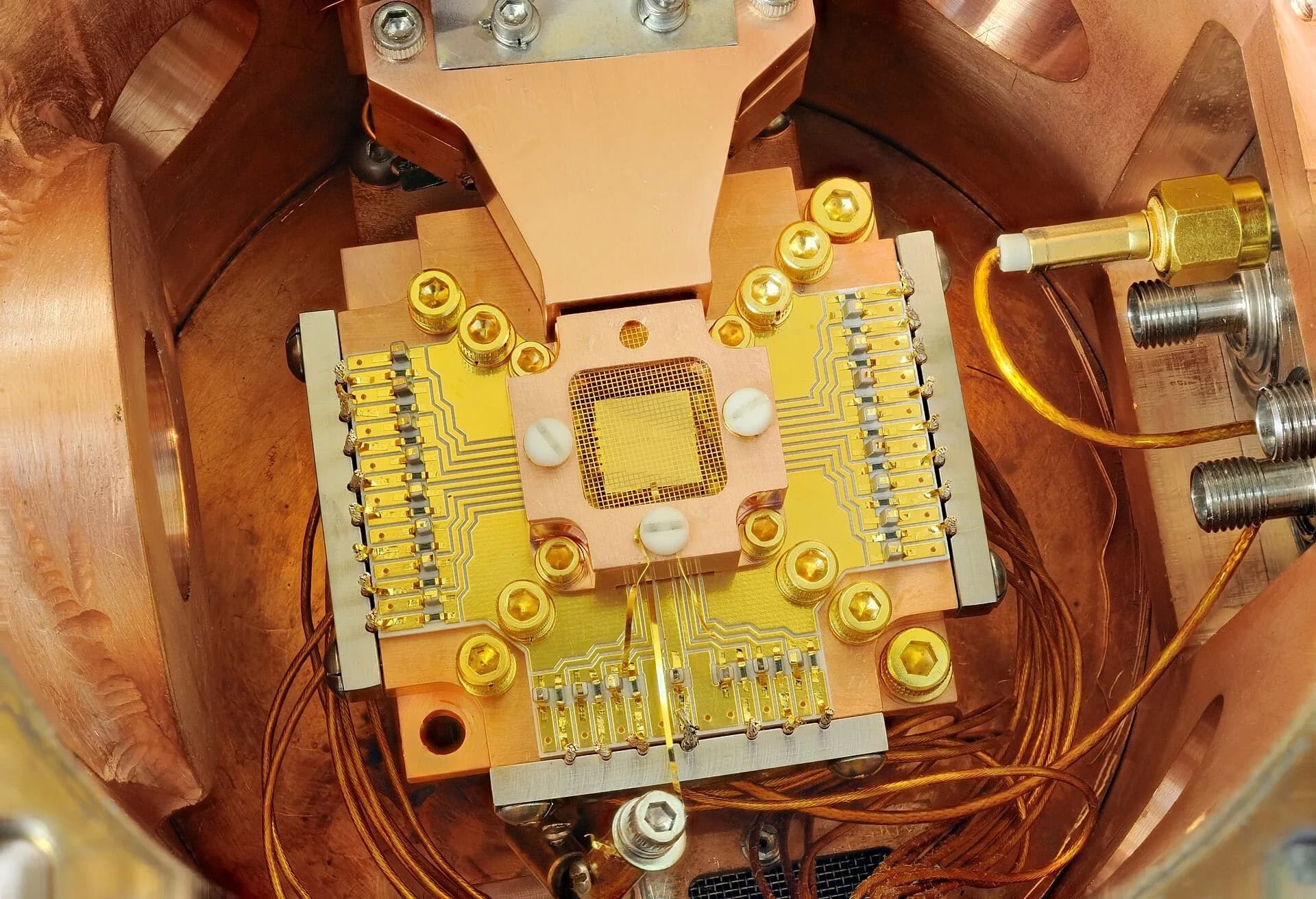
India's National Quantum Mission: ₹6,003 Crore, Four Hubs and a Race to Build Quantum Machines
Approved in April 2023, the eight-year mission aims for quantum computers of 50 to 1,000 qubits and secure quantum links over 2,000 km. What has been reported so far.

India has set itself an ambitious goal: to build its own quantum computers, secure quantum communication networks and ultra-sensitive quantum sensors. The vehicle is the National Quantum Mission (NQM), which the Union Cabinet approved on April 19, 2023.
The basics
- Outlay: ₹6,003.65 crore for the period 2023-24 to 2030-31.
- Run by: the Department of Science and Technology (DST).
- Aim: to seed, nurture and scale up scientific and industrial research in quantum technology and build a national ecosystem.
Four hubs, four themes
The mission organises research into four Thematic Hubs (T-Hubs), each hosted by a leading institution:
- Quantum computing: the Indian Institute of Science (IISc), Bengaluru
- Quantum communication: IIT Madras, together with C-DOT
- Quantum sensing and metrology: IIT Bombay
- Quantum materials and devices: IIT Delhi
The hubs were set up in 2024-25 and work with technical groups at institutions in 17 states and two union territories, according to a government reply to the Rajya Sabha in February 2026.
The targets
The mission's headline goals include:
- Quantum computers: intermediate-scale machines of 50 to 1,000 physical qubits within eight years, starting with 20 to 50 qubits in the first three years and 50 to 100 by the fifth.
- Quantum communication: secure links, using the principles of quantum physics, over 2,000 km within India via satellites, and long-distance links between cities.
- Sensing: high-precision atomic clocks for timing and navigation, and very sensitive magnetometers.
- Materials and devices: the components these systems need, such as superconducting circuits and single-photon sources.
What progress has been reported
In June 2026, Minister of State for Science and Technology Dr Jitendra Singh said the mission had already achieved more than half of its targeted outcomes within three years, with notable gains in quantum-secure communication and parallel advances in quantum computing and allied research, according to coverage of the announcement. The government has also reported that the mission supports start-ups working on quantum technologies.
We were unable to find a published figure for the largest number of qubits an Indian-built quantum computer has achieved. Independent verification of the claimed progress against the mission's published milestones would be valuable.
What to watch next
The mission's own schedule gives a way to check progress. By the three-year mark it aimed for machines of 20 to 50 qubits, and by year five 50 to 100. Useful signs will be:
- published qubit counts and error rates for machines built in India, ideally in peer-reviewed papers;
- the first demonstrations of long-distance quantum-secure links between cities;
- output from the four hubs, including research papers, patents and prototypes;
- the number of start-ups that move from grants to paying customers, and how much private money follows the public funding.
Why it matters
- Security: quantum communication and new encryption methods are relevant to national security. (See Is quantum computing a threat to today's encryption?)
- Research capacity: funding for laboratories, equipment and doctoral researchers helps keep talent in India.
- Industry: start-ups can build components, software and services, the parts of the supply chain where a country can compete without owning the biggest machine.
The challenges
Quantum hardware is among the hardest engineering challenges in the world. India will need specialised fabrication, ultra-cold equipment and highly trained people, and it is competing with countries and companies that began earlier and spend more. The mission's eight-year timeline is realistic only if equipment procurement, talent and private investment all keep pace.
For the global picture, read Quantum computing explained.
Sources
This article draws on the following reporting. Dates are when each source was originally published.
- Department of Science and Technology: Cabinet approves National Quantum Mission to scale-up scientific & industrial R&D for quantum technologies
- KNN India: NQM operationalises four quantum hubs, supports eight startups: Dr Jitendra Singh
- Voice & Data: Government agencies advance quantum research across India
- Anantam IAS (citing PIB): National Quantum Mission: Over half of targets met within three years

Written by
Newsroom
Reporting, explainers and analysis from The Daily’s editorial desk, based on verified public sources that are listed with every story.
More from The Daily Desk →Enjoyed this story?
Get the best of The Daily in your inbox every Sunday.