Air Pollution in India Explained: AQI, GRAP, Stubble Burning and What It Does to Your Health
Every winter, north India's air turns toxic. Why it happens, what the AQI and GRAP stages mean, how much stubble burning and traffic contribute, what the National Clean Air Programme has achieved, and how to protect your family.
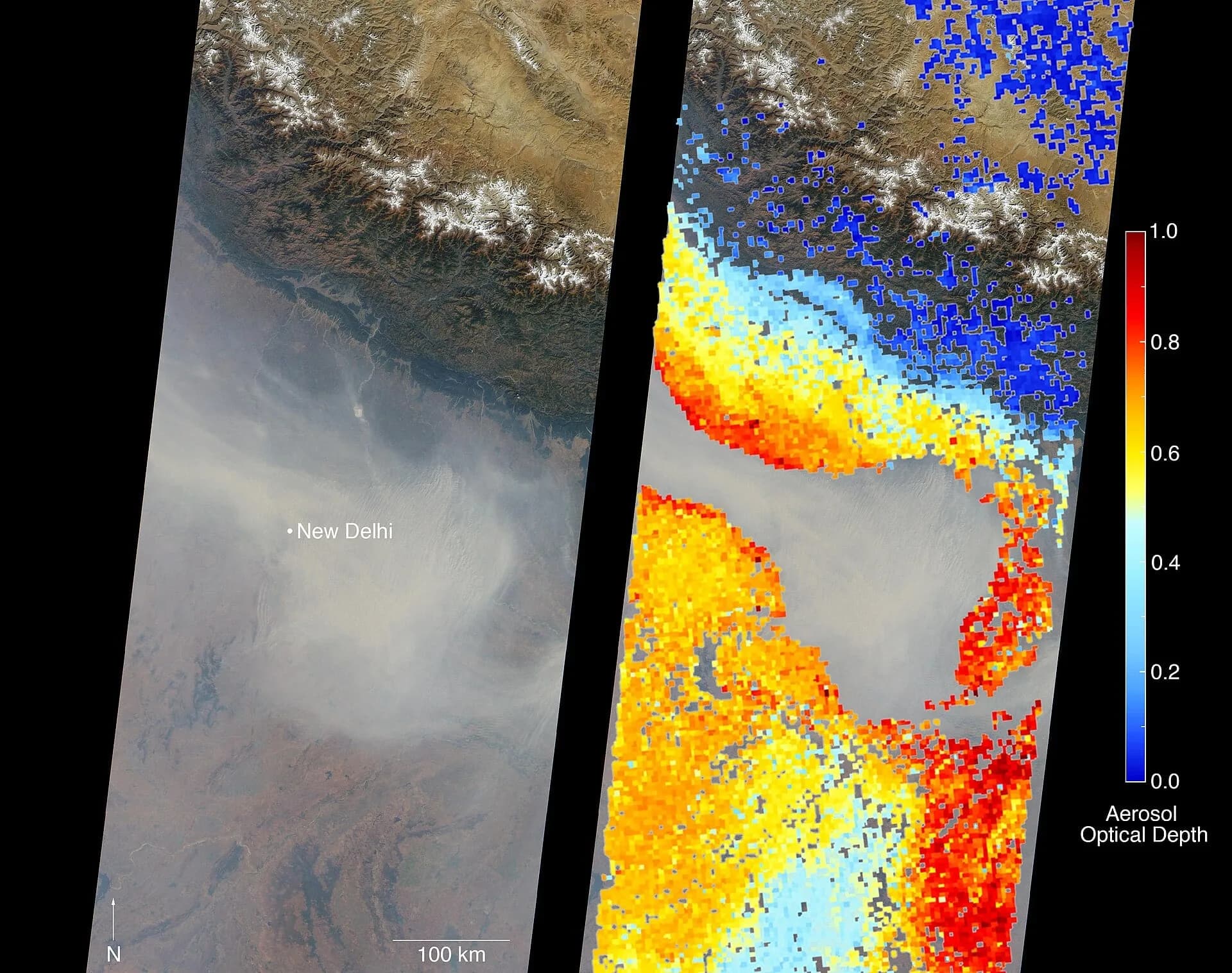
Every year, around the end of Diwali, the same pictures return: the India Gate arch fading into a grey haze, schools moving online, doctors warning of wheezing children. Air pollution is not only a Delhi problem, and it is not only a winter problem. But winter in north India is when it becomes impossible to ignore.
This guide explains, in plain language, what is in the air, why it gets so bad in winter, how the AQI and Delhi's emergency plan work, what the government has and has not achieved, and what you can do to protect your family.
Quick answer
- The main danger is PM2.5: particles finer than 2.5 microns that reach deep into the lungs and bloodstream.
- Winter makes it worse because cold, still air traps pollution close to the ground.
- The year-round sources are vehicles, road and construction dust, industry, power plants and burning of waste and solid fuels. Crop-stubble fires add a seasonal spike in October and November.
- India's AQI runs from 0 to 500 in six bands. In Delhi-NCR, rising AQI triggers the four-stage GRAP emergency plan.
- The World Health Organization links fine particles to heart disease, stroke, lung disease and cancer, and estimates that outdoor air pollution caused 4.2 million premature deaths worldwide in 2019.
What exactly is in the air?
Air pollution is a mix. The pollutants India measures for its Air Quality Index are:
- PM2.5 and PM10: fine and coarse particles from combustion, dust and chemical reactions in the air.
- Nitrogen dioxide: mostly from vehicle exhausts.
- Sulphur dioxide: from coal burning in power plants and industry.
- Carbon monoxide: from incomplete burning.
- Ozone: formed when sunlight reacts with other pollutants, a bigger problem in summer.
- Ammonia and lead.
Of these, PM2.5 does the most harm. The particles are about thirty times thinner than a human hair. India's national standard allows an annual average of 40 micrograms per cubic metre and a 24-hour average of 60. The WHO's guideline is far stricter: 5 a year and 15 in a day. On bad winter days, Delhi's readings run many times above both.
Why does winter make it so much worse?
Pollution sources do not switch on in November; the weather changes.
- Temperature inversion: on winter nights, the ground cools fast and a layer of warmer air settles above the cold air. It acts like a lid, trapping smoke and dust near the ground.
- Low wind speed: calm air means pollution is not blown away.
- A lower "mixing height": the layer of air in which pollution can spread shrinks in winter, so the same emissions are packed into less air.
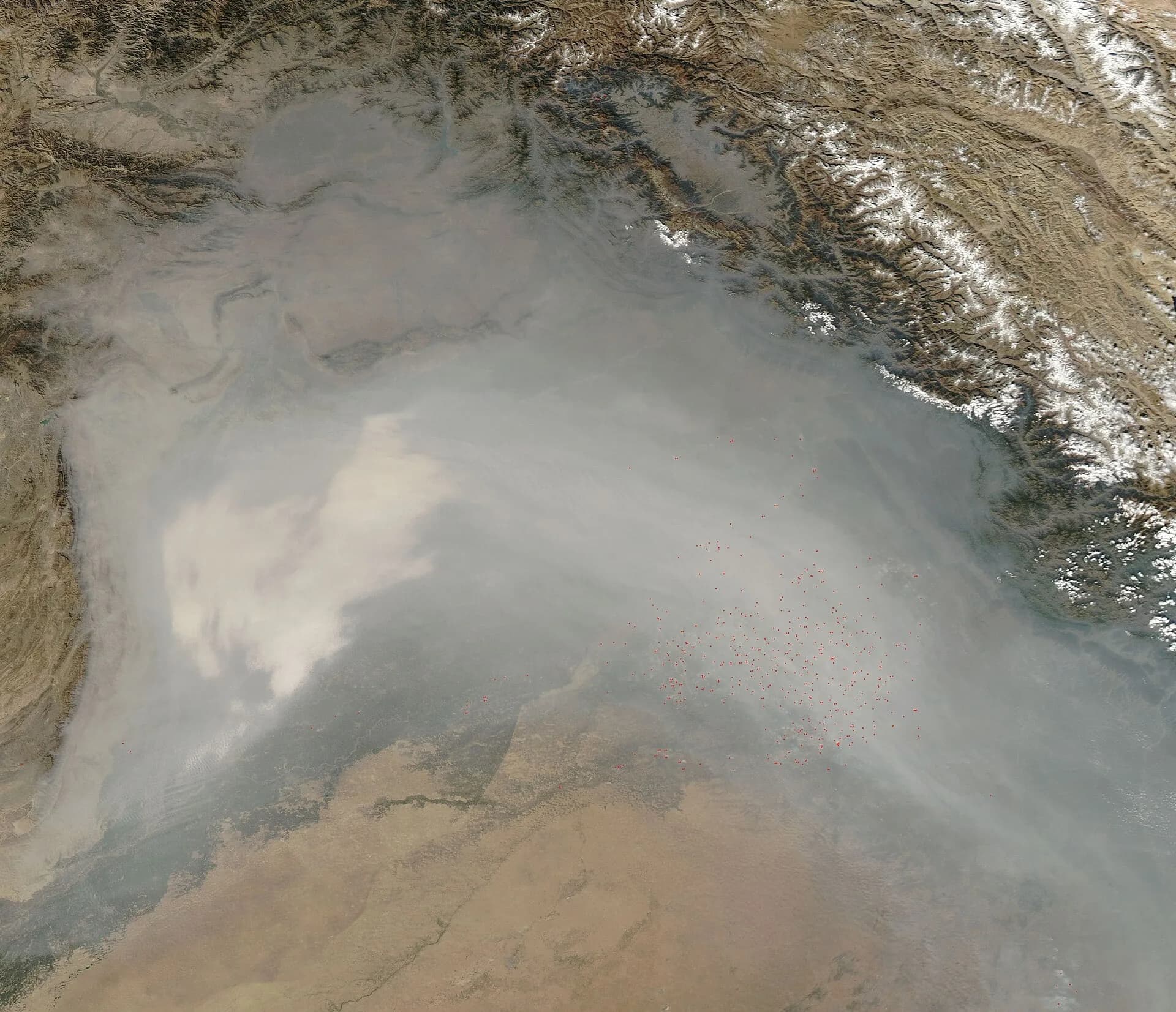
- Geography: the Indo-Gangetic plain is a bowl, with the Himalayas to the north. Pollution from a vast, densely populated area has nowhere to go.
- Extra winter sources: stubble fires, firecrackers around Diwali, and more burning of wood and waste for warmth.
That is why the AQI is usually worst late at night and early in the morning, and slightly better in the afternoon when the sun warms the ground and the air mixes.
Where does the pollution come from?
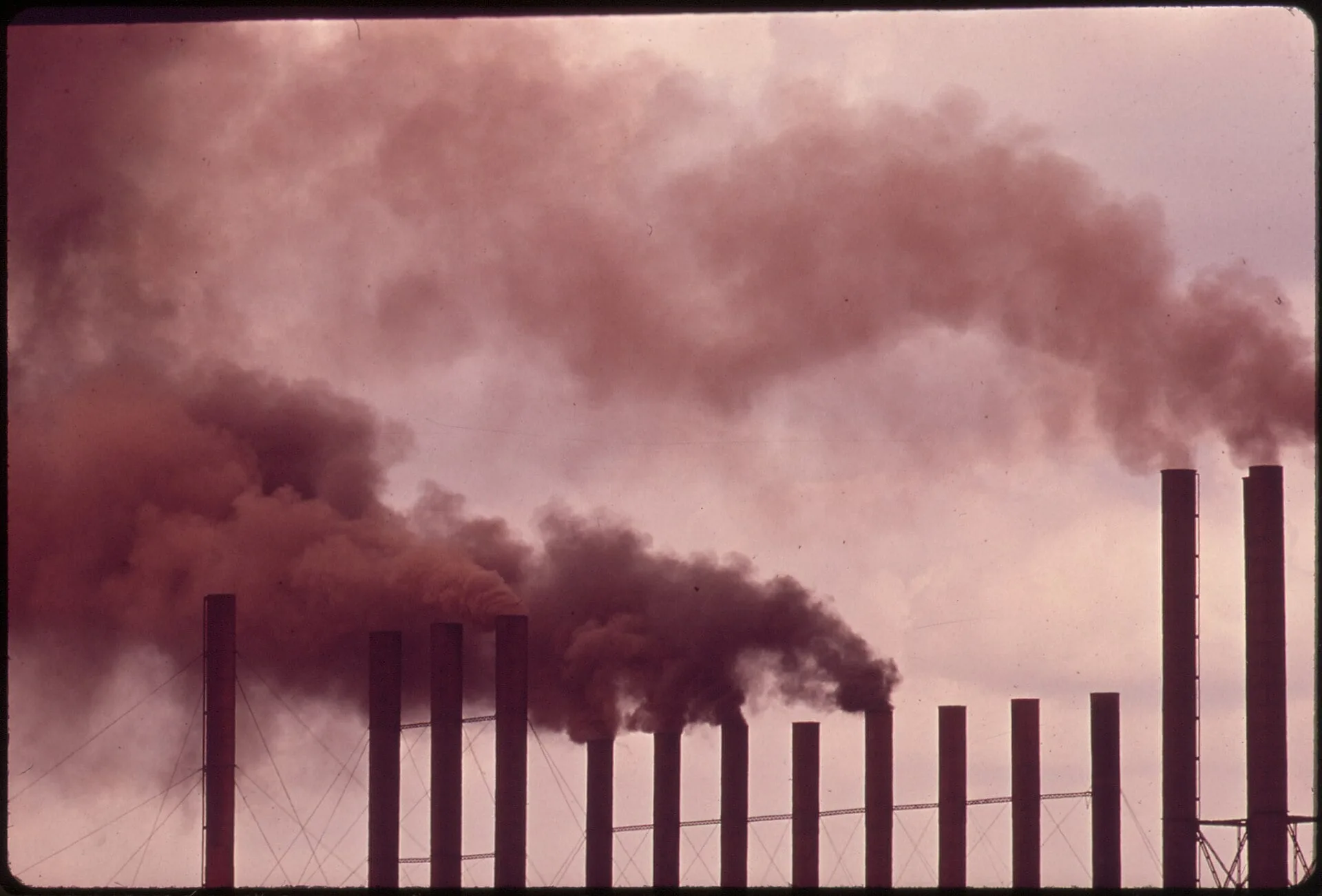
There is no single culprit, and the shares change by city, season and even by the hour. Source studies for Delhi have repeatedly found these main contributors:
- Transport: exhaust from trucks, cars, two-wheelers and buses, plus dust kicked up by traffic.
- Dust: from roads, construction sites and open land.
- Industry and power plants, including those outside the city.
- Burning: garbage, biomass and solid fuels used for cooking and heating.
- Crop-residue burning in neighbouring states, mainly in late October and November.
- Secondary particles: gases that turn into fine particles in the air.
A large share of Delhi's winter PM2.5 is generated outside the city, which is why the problem needs action across the whole region, not only inside Delhi.
Is stubble burning the main cause?
It is a major seasonal contributor, not the year-round cause. After the paddy harvest, farmers in Punjab, Haryana and increasingly other states burn the leftover straw to clear fields quickly for wheat sowing. On days when winds blow from the north-west, smoke from these fires can account for a large slice of Delhi's pollution. On other days, its share is small.
The picture is shifting. Early in the 2026 season, satellite monitoring reported by Down To Earth showed Madhya Pradesh ahead of Punjab in the number of fires. Punjab's count from mid-September to early October was the lowest for that period in seven years, according to the government's satellite bulletin, though daily numbers were rising by mid-October as harvesting picked up.
Alternatives exist: machines that cut and mulch straw into the soil, bio-decomposer sprays, and using straw in power plants and biofuel units. But they cost time and money, and the window between harvest and sowing is short.
How does the AQI work?
India's National Air Quality Index, run by the Central Pollution Control Board, turns pollutant readings into a single number from 0 to 500:
- Good: 0-50
- Satisfactory: 51-100
- Moderate: 101-200
- Poor: 201-300
- Very Poor: 301-400
- Severe: 401-500
The AQI shown is the worst of the individual pollutants. In winter, that is almost always PM2.5. Our guide to AQI categories and what to do at each level explains the health advice for each band.
What is GRAP?
The Graded Response Action Plan is Delhi-NCR's emergency rulebook, enforced by the Commission for Air Quality Management (CAQM). It has four stages tied to Delhi's AQI:
- Stage I (Poor, 201-300): dust control at construction sites, road sweeping and water sprinkling, action on garbage burning, checks on polluting vehicles, and uninterrupted power so that diesel generators are not needed.
- Stage II (Very Poor, 301-400): tighter dust and generator controls, higher parking fees to discourage private cars, more buses and metro trips, and staggered office timings.
- Stage III (Severe, 401-450): a ban on most construction and demolition, curbs on older petrol and diesel cars, possible online classes for younger students, and offices may be asked to work at half strength.
- Stage IV (Severe+, above 450): entry curbs on trucks, wider school closures and the strictest limits on vehicles and industry.
The plan was revised in November 2025 to bring several measures into earlier stages, so restrictions now start sooner. CAQM can invoke a stage in advance when forecasts predict a rise, and it can revoke stages when air improves. In January 2026, it invoked Stage IV across the NCR after the AQI crossed 400. Our GRAP explainer lists each stage's measures in detail.
What has the National Clean Air Programme achieved?
The National Clean Air Programme (NCAP) was launched in January 2019 to clean the air in more than 130 cities that did not meet national standards. Its target, later revised, was to cut PM10 levels by up to 40% from the 2017-18 baseline, or meet the national standard, by 2025-26. Cities receive funding linked to their performance.
Assessments of its record differ:
- The government's Swachh Vayu Sarvekshan 2026 ranking reportedly found that 108 of 130 cities had reduced PM10 levels, with 26 achieving cuts of more than 40%.
- An independent analysis by the Centre for Research on Energy and Clean Air, reported by The Wire, was more critical. It found that only about two dozen cities had met the revised target and that some had seen pollution rise.
Critics also point out that NCAP focuses on PM10, which is dominated by dust, while the bigger health threat is PM2.5 from burning, and that pollution crosses city and state lines that the programme's city-by-city plans do not.

What does pollution do to your body?
- Lungs: cough, wheezing, asthma attacks, bronchitis and, over years, reduced lung function and COPD.
- Heart and brain: fine particles enter the bloodstream and raise the risk of heart attacks and strokes.
- Cancer: outdoor air pollution is classified as a cause of lung cancer.
- Children: smaller lungs that are still growing, and faster breathing, make them especially vulnerable.
- Pregnancy: exposure is linked to low birth weight and premature birth.
- Everyone: sore throats, burning eyes, headaches and fatigue on bad days.
People with asthma, heart disease or diabetes, older adults, and outdoor workers such as traffic police and delivery riders face the greatest risk.
How to protect yourself and your family
At home - Keep windows shut in the early morning and late evening; air out the home in the afternoon if the AQI allows. - Run an air purifier with a HEPA filter in the bedroom, sized for the room, and change filters on time. - Avoid indoor pollution: incense, mosquito coils, candles and frying without ventilation.
Outside - Check the AQI before planning exercise, and shift workouts indoors on Poor or worse days. - Wear a well-fitted N95 in traffic and on Very Poor or Severe days. Cloth and surgical masks offer much less protection against fine particles. Our guide on masks and air purifiers explains what to buy. - Avoid walking or cycling along busy roads when you can.
For children and older people - Limit outdoor play on Poor and worse days. - Make sure asthma and heart medicines are up to date and on hand. - Watch for breathlessness, persistent cough or chest pain, and see a doctor early. Know the signs of a stroke.
What would actually fix it?
There is broad agreement among experts on the big levers, even if progress is slow:
- Cleaner transport: better buses and metro, electric vehicles, and stricter checks on polluting trucks.
- Clean energy and industry: pollution controls at coal plants and a shift to gas and renewables for industry.
- Ending open burning: of waste, of biomass for cooking (through clean cooking fuel), and of crop residue (through machines, markets for straw and support for farmers).
- Dust control on roads and construction sites.
- Regional planning, because the air of the Indo-Gangetic plain is shared.
Air pollution is a slow problem with fast-moving days. The best thing an individual can do is protect their own health on the bad days, and support the policies that will bring the bad days down over the years.
This article is for general information and is not medical advice.
Common questions
Is pollution only a Delhi problem? No. Many cities across the Indo-Gangetic plain, from Punjab to Bihar, record similar winter levels, and industrial cities elsewhere have their own problems. Delhi gets more attention because it is the capital and is closely monitored.
Do firecrackers really make a difference? They cause sharp, short spikes on Diwali night and the morning after, adding to an already bad situation. Over the whole season their effect is smaller than that of vehicles, dust or stubble smoke, but the spike is dangerous for people with asthma and heart disease.
Does an air purifier really help? A HEPA purifier sized for the room can cut indoor PM2.5 substantially when doors and windows are kept closed. It helps most in the bedroom, where you spend the longest stretch of time.
Should children stay home on bad days? Follow official school advisories. On Very Poor and Severe days, limiting outdoor activity matters most; many schools move assemblies and sports indoors.
Guides in this series
Sources
This article draws on the following reporting. Dates are when each source was originally published.
- World Health Organization: Ambient (outdoor) air pollution: fact sheet
- Central Pollution Control Board: National Air Quality Index
- Commission for Air Quality Management: Graded Response Action Plan (GRAP) schedule
- Press Information Bureau: National Clean Air Programme to improve air quality in 131 cities
- The Wire: National Clean Air Programme flounders, 2026 target unlikely to be met
- Down To Earth: Stubble burning season begins; Madhya Pradesh ranks first, Punjab second and Uttar Pradesh third
- News On AIR: CAQM invokes Stage 4 of GRAP in Delhi-NCR as AQI crosses 400 ·
Cite or link to this story
Quoting this article or using its figures? Please credit The Daily with a link.
Source: <a href="https://www.thedailymagazine.in/news/air-pollution-india-explained-aqi-grap-health">Air Pollution in India Explained: AQI, GRAP, Stubble Burning and What It Does to Your Health</a>, The Daily, 15 Oct 2026.Written by
Stories, explainers and features published by The Daily, based on public sources that are listed with every article.
More from The Daily →Enjoyed this story?
Get the best of The Daily in your inbox every Sunday.